The September Playlist
When asked “where did you go this summer?” my response is: I went to Lowe’s.
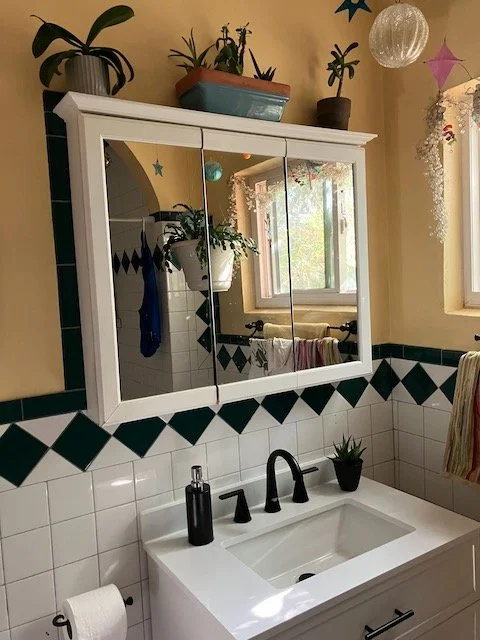
This summer I have been wearing another hat: House Project Manager. Between a bathroom refresh and a kitchen cabinet renovation, there have been so many tasks. So many decisions to make. So many people to manage. So many trips to Lowe’s. So much “adulting,” the word in our house for anything requiring a grownup: a leaky roof, rusty pipes, car repairs, a furnace emergency.
One day while driving to Lowe’s I thought, house projects are one big test of sequencing with flowcharts of branches and options and crossroads. This decision must be made before that one. This choice is dependent upon that event. If this, then that.
I have been practicing sequencing my entire teaching life. I am convinced, in fact, that good sequencing is the secret to good teaching. First, 5-Finger Positions, then major scales. First, note flashcards, then spelling dominant 7th chords. First, Zachariah Zebra, then a Brahms Intermezzo.
Years ago, I was mentoring a young teacher who was doing some substitute teaching for the studio while Matt and I were out of the country. Since Greg was already very familiar with my teaching method, I assumed he would take the next logical step when making new assignments. When I returned, I was amused to find this written in one of the student’s practice notebooks about a Bartók Mikrokosmos assignment:
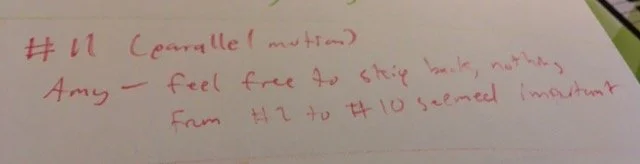
Well then.
I then discovered that Greg had taught another young elementary student the C-sharp melodic minor scale, because that was the next scale to teach after introducing minor 5-Finger Positions. Obviously. This was the musical equivalent of teaching a first-grader who just learned basic addition the quadratic equation. Which only served to remind me that pedagogical sequencing is a skill to be learned too.
I know nothing about house project sequencing, but I had good mentors. Christopher, our handyperson/contractor, hooked me up with the company that refinished our old porcelain bathtub and, after installing a new bathroom sink and repairing six windowsills, he returned several times to finish up details with caulking and sealing. He fixed a random lamp and a wonky ceiling fan and replaced a broken door handle. Best of all, he was so quiet I hardly knew he was here.
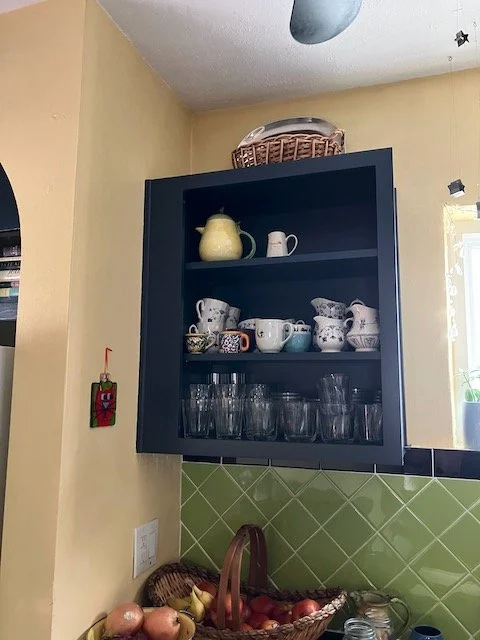
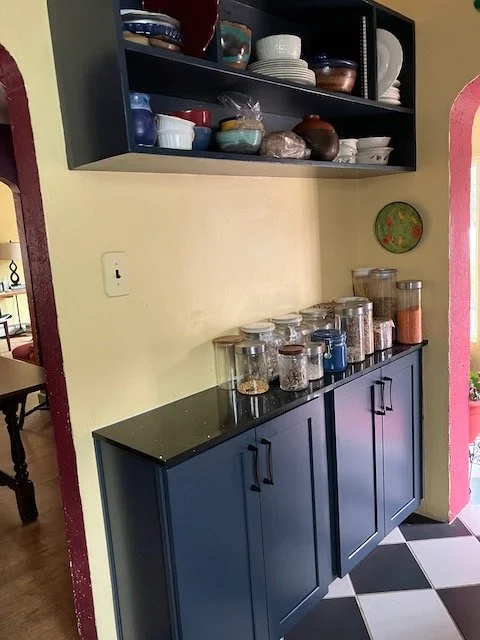
My kitchen designers from Lowe’s, Kenneth and Dave, were characters from Queer Eye and This Old House, respectively. What one of them missed, the other caught (Suffice to say, I missed a lot.). In a move straight out of Miracle on 34th Street, Dave sent me to buy paint from a different store because the color match would be better. Almost daily voicemail messages and texts from Lowe’s kept me updated on the status of cabinet building and shipping dates. The girl at the installation office treated me like a sister: “Honey, let’s get this thing scheduled! You are ready.” (I was so ready.) Billy and Paul were our demo and installation team. They were not quiet, but they were amazing.
Me: We need to save these countertops.
Paul: Well, Amy Greer, this whole thing is like glass. We are good, but no promises.
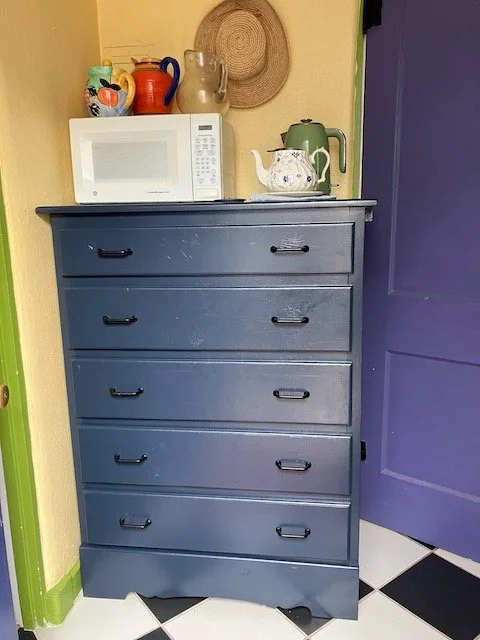
Some would say that this conversation represented my basic lack of understanding of kitchen construction sequencing. I should not have replaced tile and countertops first and then waited ten years before tackling the cabinets. But alas! Paul and Billy saved the countertops. They are good. While they were making the kitchen like new, I practiced, I painted an old chest of drawers for the pantry area to match the cabinets, I tried not to climb the walls (I totally climbed the walls.).
Repeatedly this summer, I was reminded of the wise teacher and writer Parker Palmer’s concept of “integration.” Most of our culture supports compartmentalization, but Palmer argues that integration is a more holistic and spiritual way to live in this world. Instead of wearing different hats and adopting different roles and rules depending upon the circumstances, it would serve us better to live an “undivided life” without boundaries between work and play. For me, the interruptions and disruptions of the last few months have not been just a house project. This has been also workplace project, my work and play spaces one and the same.
That means my piano students have had strong opinions about what happens around here too. This has been both maddening and magical, depending upon the moment.
Case in point: In the final week of summer lessons, when we were in the middle of the two phases of the bathroom project, a Little One came out of the bathroom, sat down at the piano and said, “Miss Amy, where are all the pretty things in the bathroom?”
“Well,” I replied. “We have been doing some work around here and so I had to take down the pretty things so they would be safe. Did you notice the new sink?”
“No, I did not notice the new sink. I just noticed that there were no pretty things, and when I am using the bathroom I like to look at the pretty things.”
Thanks to the laws of house-project sequencing, the last month has lacked pretty things at times. It has been both maddening and magical, but integration we’ve got covered, thank you. But no wonder during the final “extra” hours of the kitchen construction chaos when Paul mentioned the word “jackhammer” regarding a solution to a pesky leak in the sink, I almost lost it.
The verb of the month is Sequencing, with all its variations.
The September 2026 Playlist of Practices:
Writing (from Object Permanence, September 2023):
September always feels like a reset, a chance to look at habits and work patterns with the optimism that—this time!—I’ll figure out a perfect rhythm. And with a whole new bunch of Little Ones I am thinking a lot about developmental markers of all kinds. Last week I held a special studio class for just the Little Ones. “What are we doing next week instead of your lessons?” I asked them. “Special class for just the Little Ones!” one child said. I like it that they, too, call themselves “the Little Ones.”
…What I learn from teaching the Little Ones is to do one thing at a time, a valuable and profound lesson in any situation. If I succumb to my tendency to multitask—write assignments while I’m talking, give multiple instructions at a time, dart from concept-to-concept too quickly without good transitions—I will lose them. This is bad pedagogy, pure and simple, and I know it, but it is a constant and hourly challenge to control my busy tendencies, nonetheless. Nothing teaches one how to sequence and simplify and steady my attention like a Little One. They are the spiritual teachers; I am the humbled student.
Reading:
I am a re-reader of books. It is not an exaggeration to say that I have re-read some favorite books three—five—seven times. Recently, someone mentioned Cutting for Stone by Abraham Verghese and I thought, “I loved that book. I wonder if I would still love it?” I did. What a story.
A few weeks ago perusing my shelves for some inspirational morning reading over coffee, I picked up—for about the tenth time—Annie Dillard’s The Writing Life. Over a couple of days, I re-read this precious tome about writing and living and paying attention to the world. If ever there was someone who understood the art of Doing One Thing, it was Annie Dillard. (Who would call a day spent reading a good life? But a life spent reading—that is a good life.)
When I finished the book, I thought, “I haven’t heard about Annie Dillard in ages. I wonder how she is?”
The very next day I heard she had died.
After Wendell Berry died last month, a friend said, “It feels like some of the old prophets are moving on.” Annie Dillard was another of those old souls.
The world has never needed the prophets more. The folks like Mary Oliver who asked us: Tell me, what is it you plan to do with your one wild and precious life? Or Dolly Parton who gave us a whole new definition of “pretty thing.” Or Gloria Steinem who at 92 still gathered groups of young women together in her New York apartment to wrestle with tough issues and thorny questions. As singer/songwriter Linford Detweiler wrote after Dillard’s death, “The world feels less mature, like some of the adults have left the room.”
It is now on us to pay attention. Or as Dillard wrote: “We are here to abet Creation and to witness it, to notice each thing, so each thing gets noticed … so that Creation need not play to an empty house.”
Teaching:
It was the first week back of teaching after the August break (“Where did you go this summer, Amy?” “I went to Lowe’s.”). “How does the first week back feel?” Matt asked me. “Exactly like the rest of the summer,” I responded, not without a tiny bit of bitterness.
It was true. I am often reminded that while I love the idea of a school year reset, after a summer of piano lessons and a stable student roster that rarely changes, there is not much to mark a difference between a week of July lessons and a week of September lessons. (See above: Integration, we’ve got covered, thank you.) Even my newest Little Ones this year hardly make a ripple because they are younger siblings of current students, which means the family already understands practice boxes and studio requirements. The beginning rote songs are familiar to both the parent and the eager Little One. Learning “piano town” full of cats and elephants and dogs? Yep, we’ve already got that.
But it was the first week back in a new school year, which deserved if not a conversation, at least a passing nod of attention. I got reports on classrooms and new teachers; I heard about zero hour jazz band and adjusted bell schedules. Gus, a bright and happy sixth- grader, was telling me about the family activities since I had last seen him. Gus, I noted with a smile, was also learning the art of sequencing a good story. Repeatedly I heard this refrain, hinting at the fun was still ahead: “And Miss Amy! That’s not even the best part!”
I was—and still am—pretty charmed by his emerging narrative skills. I’ve always been a sucker for a good story. It was a good way to start a reluctant semester, particularly given the challenges of heat and exhaustion and—that’s not even the best part!—kitchen and bathroom renovations of the last few months.
Last week we said goodbye to our kitchen construction team. Kitchen cabinets installed, plumbing functional, walls and tiles repaired, painting done. I have hung up my House Project Manager Hat and all the pretty things are back in the bathroom. As they say in the Christian calendar, we are now living in ordinary time. We are the adults left in the room. May the fall season begin, the best part still to come.